


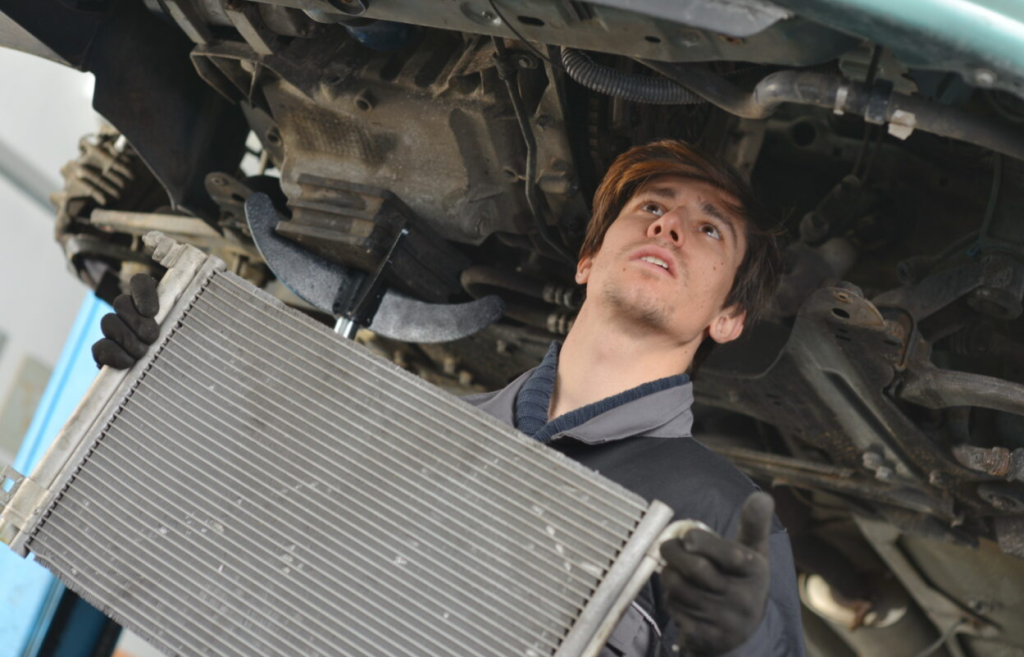
Your car’s radiator serves the vital function of cooling the coolant as it draws heat from the engine, thereby preventing overheating. If the radiator suffers a fault, you’ll soon see the temperature gauge on your dashboard shoot up. Given how disastrous overheating can be to any car’s engine, it’s important to know the key symptoms of a malfunctioning radiator, as laid out below. You can have your radiator repaired or replaced at your local CDJR dealership.
Rust-Colored Coolant
Most modern radiators have aluminum oxide coating on the inside that’s resistant to rust but can still gradually corrode. Modern coolant also has anti-corrosion properties, but if your coolant grows old and loses these qualities, the aluminum coating can deteriorate. This eventually exposes the metal beneath, which is more susceptible to rust. If your radiator develops internal rust, you’ll see the coolant turning a murky rust-brown inside the coolant reservoir.
Externally Rusting Radiator
Radiators can also rust on the outside, which is easier to spot. If you notice minor patches of rust on your radiator, clean it with a good anti-rust product. More extensive rust, however, might spell the end for the radiator; you’ll need to install a new one.
Leaking Coolant
It’s possible for various points on the radiator to spring a leak. This includes the radiator cap, the drain plug, and especially the pan gasket. As coolant is pressurized and expands when drawing heat from the engine, all radiator seals and connections need to be extremely tight. If your radiator ever leaks coolant, you might notice a brightly colored fluid puddling underneath your car; there may also be air bubbles inside the coolant reservoir.
Damaged Radiator Fins
The many fins of a radiator create a great deal of surface area, which allows heat to escape efficiently. However, these slender fins are also susceptible to damage if stones fly into the engine compartment or there’s any kind of hard jolt or impact. If your radiator’s fins become bent or broken, you’ll probably need to replace the radiator.
Overheating Engine
The final and most serious indication of radiator problems is the engine overheating. If you notice the temperature gauge flicking upward, ticking and knocking sounds, plummeting engine power, or white vapor seeping from under the hood, pull over immediately before your engine seizes up.
Ask Your CDJR Dealer for a Pressure Test and Radiator Repair
It’s advisable to arrange periodic inspections of your radiator and the entire cooling system. A trusted technician at your local dealership can inspect the coolant and hoses, inspect the whole radiator, and also pressure test the system to check for a malfunctioning water pump, seal, or hose connection. If they find a fault, they can repair or replace the radiator as required.
Visit Freedom Chrysler Dodge Jeep Ram North By Ed Morse in Sherman, TX, today to have your radiator serviced by experienced professionals. Our award-winning, family-owned dealership has been diligently serving the region’s drivers for decades.
Connect with us


- February 2026
- January 2026
- December 2025
- November 2025
- October 2025
- September 2025
- August 2025
- July 2025
- June 2025
- May 2025
- April 2025
- March 2025
- February 2025
- January 2025
- December 2024
- November 2024
- October 2024
- September 2024
- August 2024
- July 2024
- June 2024
- May 2024
- April 2024
- March 2024
- February 2024
- January 2024
- December 2023
- November 2023
- October 2023
- September 2023
- August 2023
- July 2023
Archives
- 2023 Dodge For Sale Sherman TX
- 2024 Dodge Hornet
- 2024 RAM Trucks
- 2024 Wagoneer
- 2025 Jeep Grand Cherokee 4xe
- 2025 Wagoneer S
- 2026 Jeep Wrangler
- 2026 RAM 1500
- 2026 Wrangler
- Activities Near Sherman TX
- Auto Repair Sherman TX
- Chrysler Dealership Sherman TX
- Chrysler Minivans for sale Sherman TX
- Dodge Dealership North Dallas
- Dodge SUVs Sherman TX
- Family Fun Activities Forth Worth
- Family Fun Activities in Sherman TX
- Freedom CDJR North By Ed Morse
- Freedom Chrysler Dodge Jeep Ram North By Ed Morse
- Fun Things to Do North Dallas
- Jeep Dealership
- Jeep Models Sherman TX
- Jeep Wrangler
- Jeeps For Sale North Dallas
- New Dodge For Sale North Dallas
- New Dodge Models Sherman TX
- New RAM Trucks Sherman TX
- Outdoor Activities Sherman TX
- RAM Dealership
- Service Department Sherman TX
- SUV dealer
- Truck Dealership Fort Worth
- Truck Dealership North Dallas
- Uncategorized
- Used Jeep Dealer Sherman TX
- Used Truck Dealership